AI-Driven Identity Verification
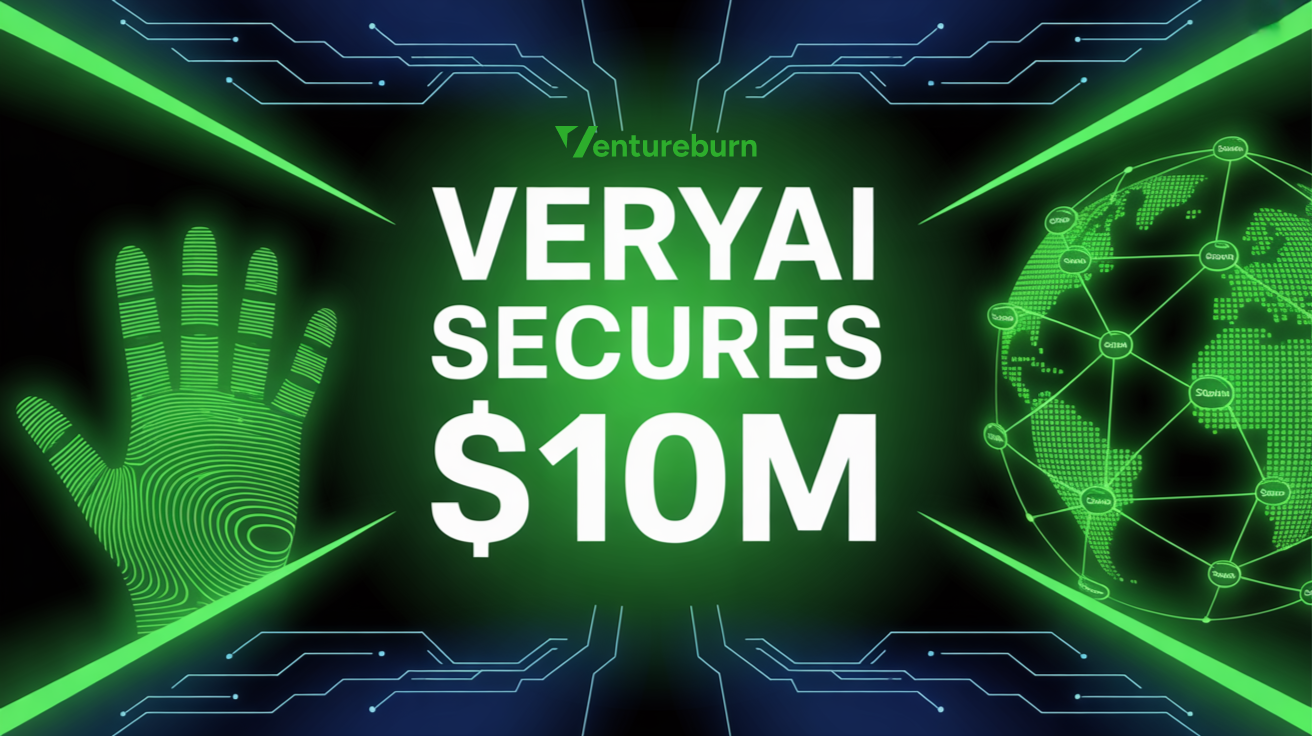
VeryAI has raised $10 million in seed funding to tackle the growing risk of AI-generated accounts on crypto platforms. The round was led by Polychain Capital, with additional support from Berggren Institute and Anagram. The startup plans to launch a biometric palm scanning system powered by the Solana blockchain.
The system creates a unique digital record linked to the blockchain. Platforms can then confirm that a person behind an account is a real human, not an AI bot. VeryAI’s approach is smartphone-based, requiring only a standard phone camera.
This design lets exchanges, fintech companies, and Web3 platforms verify identities quickly and cheaply. As AI gets smarter, crypto platforms deal with bigger risks. Deepfake bots mess with markets, push out fake news, and take advantage of people’s trust. VeryAI steps in to offer a strong, dependable way to confirm who’s real—and fights off these new threats.
Zach Meltzer, CEO of VeryAI, put it this way: “Privacy is a human right, but deepfakes and synthetic content are exposing flaws that today’s systems just can’t handle.” We built VeryAI to close that gap while respecting user privacy.” Meltzer previously helped grow Galxe to 6,000 partners and 34 million users, bringing deep experience in crypto and identity systems.
Privacy and Security at the Core
Privacy and security are central to VeryAI’s design. Instead of storing images of users’ palms, the system converts them into mathematical patterns. This method reduces the risk of data leaks or misuse. Additionally, zero-knowledge (ZK) proofs and Solana Attestation Service (SAS) allow users to prove their identity without sharing sensitive personal information.
VeryAI reports a false acceptance rate of 1 in 10 million when verifying a single hand. When both hands are used, the rate drops to 1 in 100 trillion. These numbers far exceed industry benchmarks and provide a strong reliability signal to crypto platforms.
The system also addresses shortcomings of traditional verification methods. CAPTCHAs can be solved by AI, and facial recognition is increasingly vulnerable because user faces are widely available online. Palm scans are rarely published or duplicated, making them inherently more secure.
Solana-Powered Efficiency
VeryAI is built on the Solana network, combining speed with affordability. Platforms can verify users in real time without slowing down operations. This makes frequent checks practical for exchanges and apps that process thousands of transactions per hour.
The platform operates on a subscription model. Partners can integrate VeryAI directly into their apps without purchasing additional hardware. This lowers barriers to adoption compared with alternatives such as iris scanners or specialized biometric devices.
Anatoly Yakovenko, Solana co-founder and angel investor in VeryAI, emphasised the network benefits: “Using Solana allows verification to happen quickly and securely. It is ideal for frequent identity checks that must remain private and cost-efficient.”
Balancing Security with Privacy
VeryAI’s approach really gets at a big problem in crypto: how do you keep things secure without giving up privacy? A lot of people in this space care about staying anonymous and keeping their data close. The idea of tying biometric info—like palm scans—to the blockchain can feel pretty invasive.
So, VeryAI does things differently. They only keep abstract mathematical versions of palm prints, not actual images. Once they verify you, the original biometric images are gone. With this setup, crypto exchanges, fintech companies, and Web3 apps can check who you are without ever seeing your raw data.
It cuts down on fraud and still sticks to the core idea of decentralisation. Crypto companies are increasingly recognising that identity verification is not about surveillance but trust and platform safety.
Investor Olaf Carlson-Wee of Polychain Capital said: “Every major platform, whether in finance, crypto, or social media, is grappling with AI-driven fraud. VeryAI’s palm verification closes that gap with accuracy, privacy, and accessibility unmatched by other solutions.”
Industry Implications


VeryAI stops AI-driven fraud with palm scans, ZK proofs, and SAS to verify real users while protecting privacy. Source: Created by Ventureburn.
AI-driven fraud is on the rise, so having solid biometric identity checks matters more than ever. Old-school tools like CAPTCHAs, email verification, and even facial recognition just don’t cut it anymore—deepfakes can easily slip past, spinning up fake accounts and tricking people on social and crypto sites.
VeryAI steps in to make sure there’s a real person behind every account. This stops bots in their tracks and builds real trust between platforms and their users. Palm scans work especially well for this. People don’t post pictures of their palms all over the internet, and it’s tough to fake them, so they’re a much safer bet than face scans.
On top of that, the platform uses privacy-protecting tech, so you get security without giving up your personal data. ZK proofs and SAS ensure that users prove their identity without exposing personal details. Verified users receive a digital identifier linking them to their account actions, maintaining accountability while protecting sensitive information.
More News: MetaComp Raises $13M to Expand Web2.5 Payment and Wealth Platform
The Path Forward
VeryAI plans to roll out its system on Solana, targeting crypto exchanges, fintechs, and social platforms. The startup just raised $10 million to boost its product, grow the team, and fine-tune its AI. They’re also pushing for the industry to move toward less invasive ways to verify who you are.
Palm scanning could actually outpace iris or facial scans soon—it’s safer and keeps your info more private. As AI keeps evolving, platforms need ID checks that work at scale and actually respect your privacy.VeryAI positions itself as a leading provider of such systems. Its approach demonstrates that compliance, usability, and security can coexist in a Web3 context.
Zach Meltzer added: “We want to provide platforms with a reliable verification system that is secure, efficient, and easy for users. Our goal is to make AI-driven fraud harder to execute while protecting privacy.”
VeryAI’s $10 million seed round signals investor confidence in the startup’s approach. The funding led by Polychain Capital and backed by Solana co-founder Anatoly Yakovenko, Berggren Institute, and Anagram, will accelerate the rollout of its palm verification platform.
To stay updated on crypto venture capital funding and market trends, visit our venture capital news section for more insights.