Cognition’s $1 Billion Raise Signals AI Engineering Surge
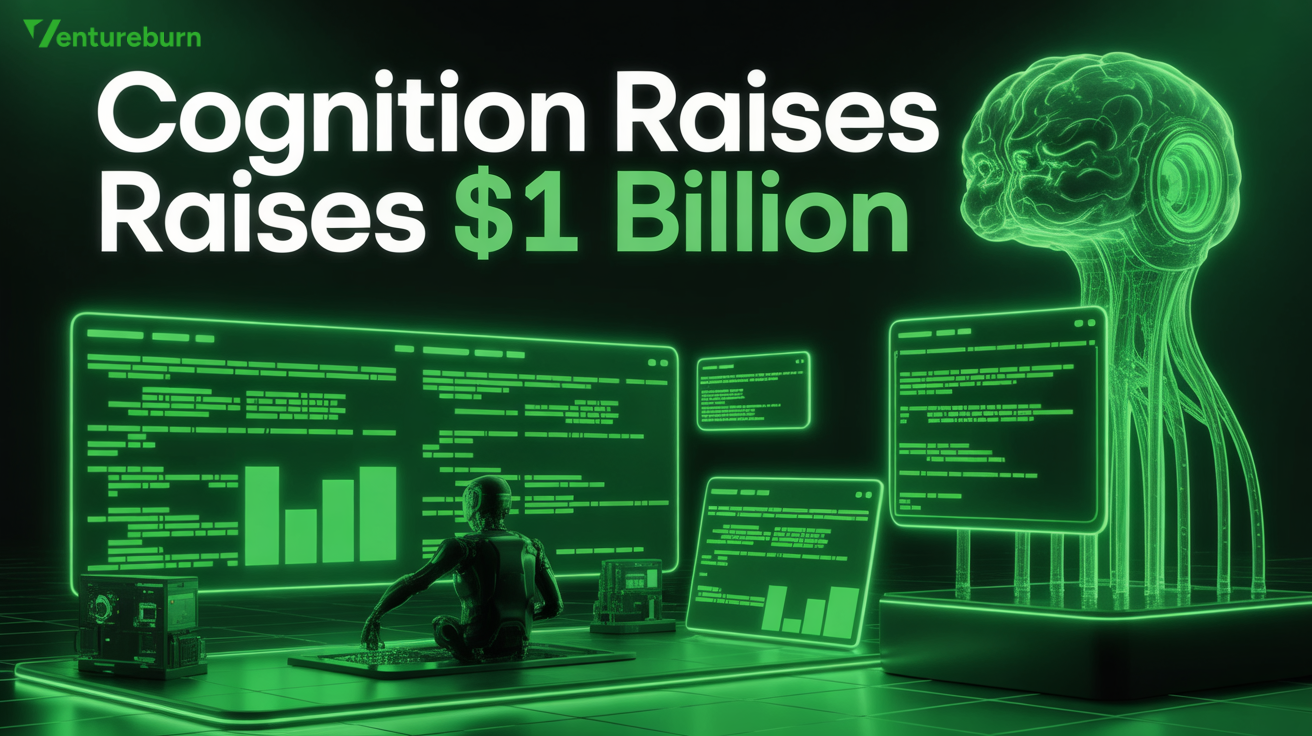
Cognition has raised $1 billion in Series D financing at a $26 billion valuation. The company builds autonomous AI agents for software engineering. Its flagship agent, Devin, can independently write, test, and deploy code.
The round was led by Lux Capital, General Catalyst, and 8VC. Other backers included Founders Fund, Alpha Wave, and Ribbit Capital among others. The raise reflects strong investor confidence in AI engineered products. Cognition was founded in 2023 in San Francisco by Scott Wu, Steven Hao, and Walden Yan.
It has quickly become a leader in AI software agent technology. The company previously raised $400 million at a $10.2 billion valuation in 2025. This year’s round more than doubles that valuation. Cognition has now raised more than $2.5 billion in total funding. Investors say Cognition’s autonomous engineering model distinguishes the company.
It goes beyond tools that suggest code snippets. Instead, its agents independently complete full software development workflows. This includes planning, coding, debugging, and deployment. The company says this capacity reshapes how software teams operate. Cognition’s growth comes amid rising demand for efficient engineering systems.
Many firms struggle to find and retain engineering talent. AI agents like Devin promise to augment or automate these roles. This trend may redefine the future of software creation. The raise positions Cognition to scale operations further.
Devin Automates the Full Engineering Cycle
Cognition’s flagship product is Devin, an autonomous software engineer. Unlike traditional coding assistants, Devin executes tasks end to end. It operates without step by step human direction. It interprets task descriptions. It then writes, tests, debugs, and deploys software. Devin combines multiple models into its decision process.
It uses proprietary systems alongside tools from other providers. This approach allows flexibility and strength in execution. Cognition routes tasks to the most appropriate models for the job. The company reports Devin is used in production by major enterprises. Clients include Goldman Sachs, Mercedes-Benz, Dell, and Santander.
The US Army and Navy also use Devin for engineering work. Latin America’s largest bank, Itaú, says Devin resolves 70 per cent of vulnerabilities automatically. Systems integrators like Infosys and Cognizant embed the platform in workflows. Cognition’s leadership says Devin’s reach is expanding fast.
The company said its revenue run rate grew from $37 million to $492 million in one year. It aims to cross $1 billion in annualised revenue soon. The rapid growth mirrors market demand for autonomous engineering tools. The autonomous model is a leap from traditional tools. Many platforms now assist with coding.
These include Cursor and GitHub Copilot. Both still rely on human direction. Devin instead takes ownership of tasks and executes them completely. This distinction is central to Cognition’s vision. Its leaders believe the next phase of software engineering lies in agents with full autonomy. They argue this reflects a new era in code generation and validation.
Competitive Dynamics in AI Code Markets


Competition in AI coding accelerates the shift toward autonomous agents that execute full software workflows. Source: Created by Ventureburn
The AI coding market is crowded and competitive. Cursor closed a $2.3 billion round in 2025 at a $29.3 billion valuation. It is now in talks to raise up to $2 billion more at around a $50 billion value. GitHub Copilot remains a dominant force backed by Microsoft. OpenAI and Anthropic both heavily invest in coding capabilities.
Cognition argues its agent layer is where durable value will form. It believes models alone will commoditise over time. Instead, value resides in planning, reasoning, and execution layers. These allow autonomous behaviour rather than simple assistance. This distinction shapes Cognition’s strategy and product roadmap.
Cognition also grows through acquisition. In 2025 it acquired Windsurf. This AI code editor brought new users and enterprise revenue. Its SWE-1.6 model became widely used inside the Cognition platform. Finding talent and technology that can scale has been key for the company.
Investors in deep tech like Lux Capital have backed complex long term projects before. The firm and others in this round have supported companies with extended development cycles. Their backing signals belief in Cognition’s architecture and team.
Cognition’s leadership also acknowledges open questions in the market. One key issue is whether enterprises will deploy autonomous agents at scale. Legal, security, and compliance functions must adapt. Many organisations remain cautious about unsupervised AI action on live systems.
More News: ClearNote Health Secures $52 Million to Scale Early Cancer Detection
Scaling Growth Amid Rapid Industry Transformation
Cognition said it will use the new capital to refine its models further. It will also improve the customer experience. The company plans additional product enhancements and partnerships. It aims to expand its global footprint and deepen enterprise adoption. CEO Scott Wu said more than 90 per cent of Cognition’s internal code is now written by Devin.
If accurate, this makes Cognition one of the most aggressive adopters of its own product. The company said this internal adoption builds confidence in the platform’s capabilities. Wu said the future of software will involve tools that can think and act autonomously. He said Cognition intends to build that future.
The company sees software engineering as a workflow that can be automated safely. The raise also allows Cognition to remain independent. This was emphasised in the wake of major acquisition activity in the AI sector. High value startups are being bought or merged into larger technology firms. Cognition said it prefers autonomy to control its destiny and drive innovation.
Cognition’s focus on the agent layer rather than the model layer reflects strategic thinking. It argues model performance will improve across the industry. Yet the layer that controls orchestration has lasting competitive potential. Some firms build agents for narrow tasks. Cognition’s approach is broader.
It treats software engineering as a set of repeatable workflows. Its systems learn and improve from repeated execution. This creates a compounding effect over time. While competition remains strong, Cognition says its growth pace positions it well. It believes its combination of models and execution logic will outpace rivals.
The company said it plans potential acquisitions to strengthen gaps. Cognition’s record raise highlights expanding investor interest in autonomous AI systems. These tools are now redefining software engineering. They may soon shift how large technology functions operate globally.
To stay updated on crypto venture capital funding and market trends, visit our venture capital news section for more insights.