Mind Robotics Raises Major Funding To Accelerate Industrial Robotics Growth
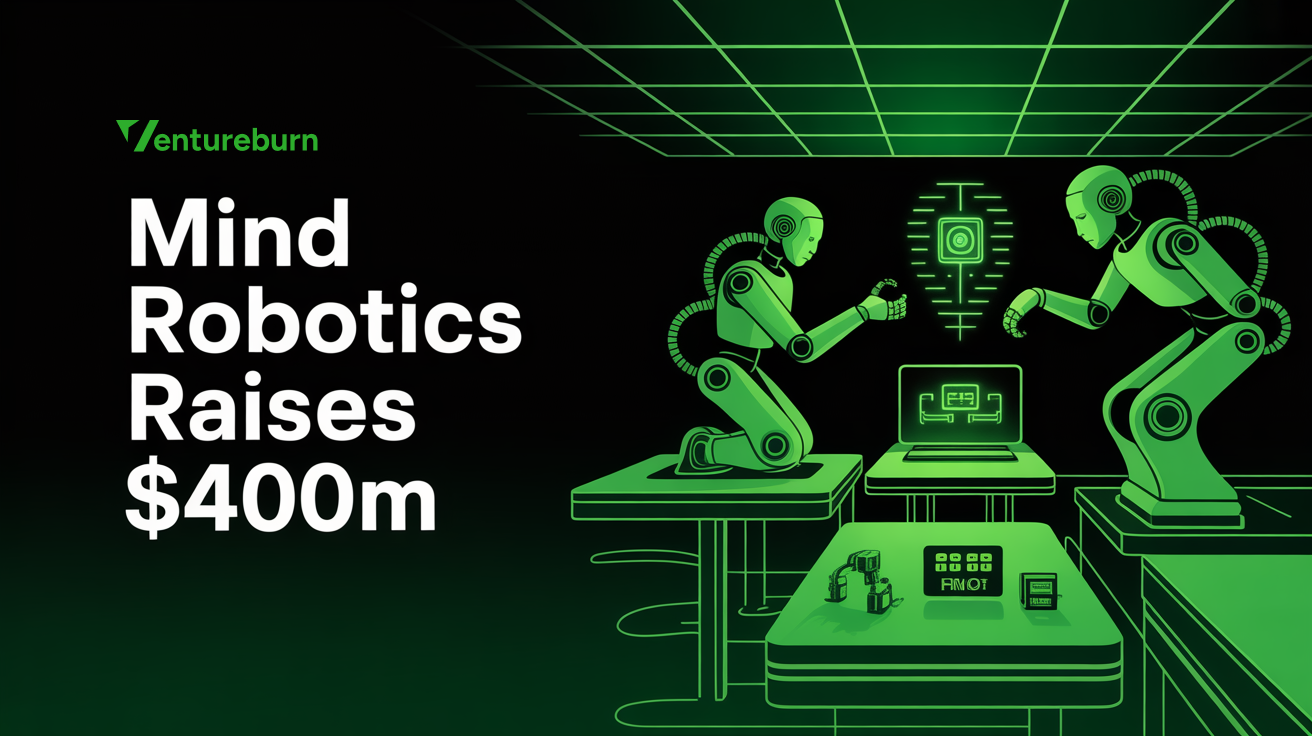
Mind Robotics has raised $400 million in fresh funding. The round was led by Kleiner Perkins and brings the company’s total capital to more than $1 billion. The new valuation now stands at $3.4 billion. The company reached this figure less than six months after it was created. The scale highlights strong investor confidence in industrial AI and robotics.
The funding also shows growing appetite for systems that can automate highly complex factory tasks. Mind Robotics was spun out of Rivian in 2025. The company was created to solve manufacturing tasks that require precision, judgement and flexibility. Traditional automation can struggle with these requirements.
Mind Robotics wants to close that gap through a full-stack robotics platform. The core system brings together AI foundation models, purpose-built hardware and deployment infrastructure. The company already has robots operating inside Rivian factories. These sites serve as live environments for training, testing and scaling new capabilities.
The latest investment includes participation from Meritech Capital, Redpoint Ventures, SV Angel, Incharge Capital, A-Star Capital and Garuda Ventures. Existing backers also joined the round. They include Accel, Andreessen Horowitz, Eclipse, Prysm Capital, Bain Capital Ventures and Greenoaks. The raise follows earlier rounds of $115 million in late 2025 and $500 million in March 2026. The new valuation represents a significant jump within a short period of time.
Rapid Expansion Strengthens Market Position
Mind Robotics is entering a competitive field. Other companies are working on advanced AI-driven robots for industrial use. Mind Robotics believes its advantage lies in the integration of the full robotics stack. The company builds the AI models, designs the hardware and manages deployment tools.
This approach removes the risk of mismatched systems. It also speeds up learning cycles. The early integration with Rivian manufacturing sites gives the company access to real industrial workflows. These workflows help the robots gain experience faster. The company plans to use its new capital to scale production.
It will expand its deployments inside active factories. It will also improve the foundation models that guide robotic behaviour. More team members will be added across engineering, hardware and operations. The goal is to build robots that can execute tasks with human-like adaptability. These tasks often require reasoning and careful movement.
Factories need systems that can handle unpredictable environments. Mind Robotics wants to meet this need by advancing flexibility inside high-volume manufacturing settings. The company’s founder, RJ Scaringe, has stated that many industries are struggling with repetitive and physically demanding work.
He believes there is not a large enough workforce willing to fill these roles. He also argues that high costs make it difficult for regions such as the United States to compete with lower-cost manufacturing markets. Mind Robotics wants to address these problems by supplying robotics systems that can operate at scale and match human flexibility.
The funding will also allow the company to test new robotic units in more complex settings. The team wants to integrate its systems deeper into real manufacturing lines. These settings require greater precision and tolerance. The company expects its robots to adopt more advanced skills over time. Factory partners will benefit from shorter training cycles and improved throughput.
Investors Back Full-Stack Approach To Robotics

Investor confidence is rising in full-stack robotics platforms that combine AI, hardware, and manufacturing data, enabling adaptive machines that improve performance through continuous real-world deployment in industrial environments. Source: Created by Ventureburn.
Investors see long-term opportunity in robotics systems that combine AI and hardware. Many believe that future factories will depend on machines that can adapt to changing tasks. Mind Robotics aims to create robots that learn from large-scale manufacturing data. These robots improve their reasoning and movement with each deployment.
The backing from Kleiner Perkins shows strong interest in industrial automation that can deliver real performance improvements. Ilya Fushman from Kleiner Perkins has said that robotics represents a major frontier for industry. He believes advances in hardware, models and infrastructure are coming together at the right time.
Mind Robotics has access to all these components. This gives the company a practical advantage. The fresh capital will support development of scalable deployments. The company plans to release more robots capable of operating safely inside demanding factory conditions. Rivian remains a core partner in this process.
The electric vehicle maker gives the company an active environment for training. Rivian is also a shareholder in Mind Robotics. Its involvement ensures consistent access to high-volume manufacturing workflows. These workflows help refine the robot’s foundation models. They also provide a continuous supply of real tasks that strengthen system reliability.
More News: Vector Raises $10M To Scale AI Driven Contact Level Advertising
Scaling Toward Global Industrial Use
Mind Robotics aims to become a leading player in industrial automation. Its focus on reasoning-intensive work sets it apart. Most industrial robots excel at repetitive or predictable actions. Mind Robotics wants to handle the tasks that require constant adjustment. These include assembly, placement and inspection.
These actions demand fine control and strong situational awareness. The full-stack system is designed to combine learning models with custom-built hardware. This helps the robots execute precise movements inside fast-moving production plants. The company’s roadmap includes broader manufacturing partnerships.
It also plans to explore deployments across new industries. Each deployment will feed more data into the model. This data strengthens performance and speeds up adaptation. Factories can expect improved productivity and reduced operational friction. Scaling these capabilities will take time. The company believes its recent funding milestones create the foundation for rapid expansion.
To stay updated on crypto venture capital funding and market trends, visit our venture capital news section for more insights.